
Buying guide · Jul 22, 2026 · 11 min read
Launch Your Branded Limo Booking App in 7 Days — Here's Exactly How It Works
By Limozoft Editorial · Reviewed by Limozoft operator research team.
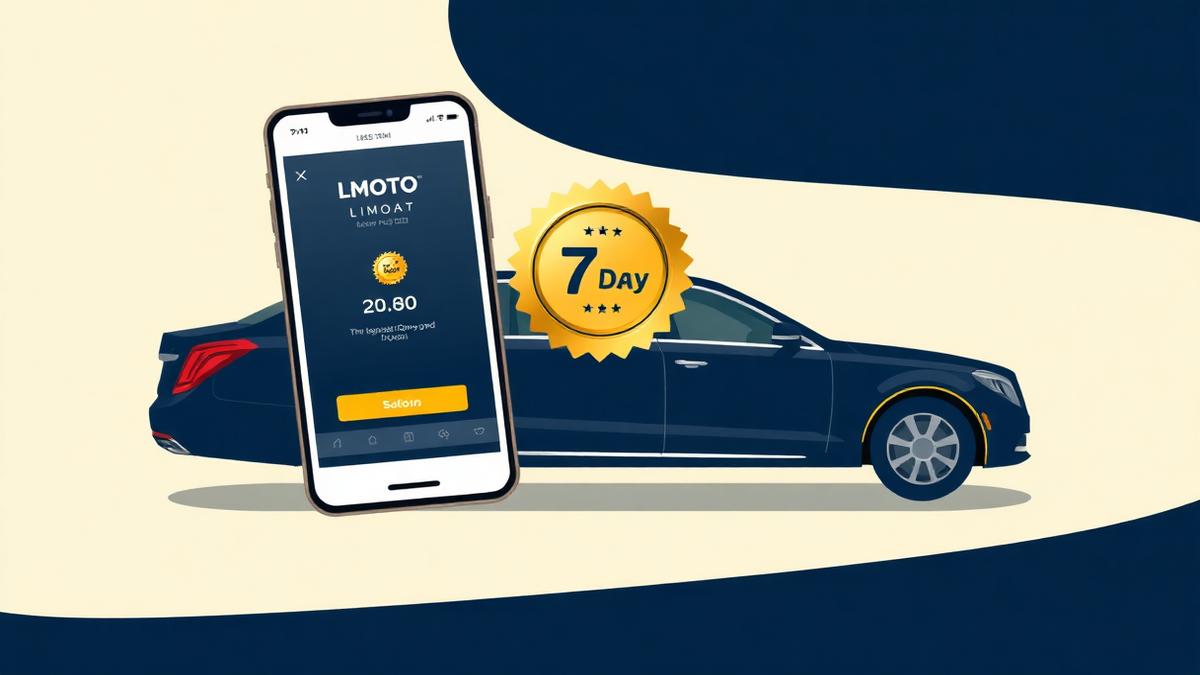
What does 'branded booking app' actually mean?
It means the passenger-facing experience carries your identity while the engine underneath is shared and already battle-tested. Your customers see your name, your fleet and your prices. You do not pay to have a booking engine invented again.
This is the difference between a seven-day launch and a bespoke build. Custom development means design, build, QA, app store review and bug-fixing cycles. Branding a proven platform means configuration.
- Your logo, colours and company name across booking, emails and SMS.
- Your vehicle classes, photos and capacities.
- Your rates, minimums, surcharges and cancellation policy.
- Your booking page on your own domain, plus an embeddable widget.
- A native driver app your chauffeurs sign into with your company's account.
What do you supply, and what does the platform supply?
Launch speed depends almost entirely on how quickly you supply your half. The platform half is already built.
You supply
Logo files, brand colours, fleet list with photos, complete rate card, airport flat rates, policies, chauffeur contact details and a Stripe account. Roughly two to three hours of work if the information already exists.
The platform supplies
Booking flow with live quoting, dispatch board, native iOS and Android driver app, card payments, confirmation email and SMS, corporate accounts with PO billing, and reporting. Nothing here waits on a development sprint.
How does the seven-day sequence run?
The order matters. Branding is applied early so every later test — quotes, confirmations, driver app — is checked in its final form rather than re-checked afterwards.
- Day 1: brand assets applied; booking page skeleton live on a preview URL.
- Day 2: fleet and rate cards loaded; test quotes compared against past invoices.
- Day 3: dispatch board configured; drivers invited to the app.
- Day 4: real jobs run through the driver app end to end.
- Day 5: booking page published on your domain and widget embedded.
- Day 6: Stripe connected; live payment and refund tested; comms wording finalised.
- Day 7: cutover, with the first day of live public bookings.
Do passengers download an app, or book on the web?
Passengers book on the web. A mobile-first booking page converts better than an app for occasional travel, because there is nothing to install before a first booking, and it can be linked from Google, email signatures and WhatsApp.
The native app is for chauffeurs, who use it daily and benefit from background location, push notifications and offline-tolerant status updates. Corporate bookers get saved profiles and repeat-booking on the web instead.
What does it cost, and what is not included?
$399 one-time setup plus $10–$40 per month by tier. Dispatch, the native driver app, the booking widget and corporate PO billing are included on every tier rather than gated behind upgrades.
What sits outside that: Stripe's own processing fees, SMS carrier charges where applicable, your domain registration, and any bespoke integration into an accounting system that has no standard export.
How do you know it worked?
Set the success test before launch week starts, then check it at day 14 rather than day 7.
- At least one booking arrived through the web page without a phone call.
- Every chauffeur completed their jobs in the app for a full week.
- One corporate client received a consolidated invoice with their PO on it.
- A card payment settled and a refund processed cleanly.
Branded platform vs custom app build
| Branded platform | Custom build | |
|---|---|---|
| Time to live | 7 days | Typically 3–9 months |
| Up-front cost | $399 one-time | Five figures and up |
| Ongoing cost | $10–$40/mo | Hosting plus developer retainer |
| Driver app | Included, already in the stores | Separate build and store review |
| Bug fixes | Vendor's problem | Your problem |
| Full design freedom | Brand-level only | Yes |
Pros and cons
Pros
- Live in a week because the engine already exists.
- Your brand on every passenger touchpoint.
- Native driver app included, no separate app store process.
- Predictable cost with no development retainer.
Cons
- Branding is logo, colours and content — not an arbitrary custom layout.
- Non-standard workflows may need to adapt to the platform.
- Deep bespoke integrations still take longer than a week.
Keep exploring on limozoft.com
Limozoft pricing ($399 one-time + $10–$40/mo) →
All-inclusive tiers with driver app, dispatch, corporate PO billing.
Limo software cost calculator →
Model your real monthly bill vs legacy per-module pricing.
Best limo dispatch software (2026) →
Head-to-head shortlist for 1–50 vehicle chauffeur fleets.
Limo software for 1–10 vehicle fleets →
The small-fleet buyer's guide and shortlist.
Frequently asked questions
Is the booking app really branded, or does it show the vendor's name?+
Can I use my own domain?+
How long does app store review take?+
What happens if I want a change after launch?+
Do I need a developer?+
Can passengers save cards and rebook?+
Ready to see it live?
Book a 20-minute demo tailored to your fleet.
Same-week launch · month-to-month · everything included.
Related reading
Operations · 12 min
From Zero to Online Bookings in 7 Days: A Limo Operator's Launch Checklist
Buying guide · 11 min
How Much Does a Limo Booking Website and App Cost? Full 2026 Breakdown
Buying guide · 11 min
Why Limo Software Takes 3 Months to Launch (And How to Do It in 7 Days)

Buying guide · 8 min
How to Choose the Best Limo Dispatch Software (2026 Guide)
Where to go next on Limozoft
- Limo Anywhere pricing, broken down line by line — what the bill really comes to once add-ons are stacked.
- Limozoft pricing — $399 one-time + $10–$40/mo with every feature included.
- Limozoft vs Limo Anywhere — the 2026 head-to-head on pricing, setup time, driver app and contract terms.
- Best dispatch software for small limo operators (1–15 vehicles).
See Limozoft on your own reservation data.
20-minute walkthrough. No slide deck. Same-week launch.
Book a free demo →