
Compliance · Aug 10, 2026 · 11 min read
TfL Private Hire Licensing: The Records a London PHV Operator Must Keep in Dispatch (2026)
By Limozoft Editorial · Reviewed by Limozoft operator research team.
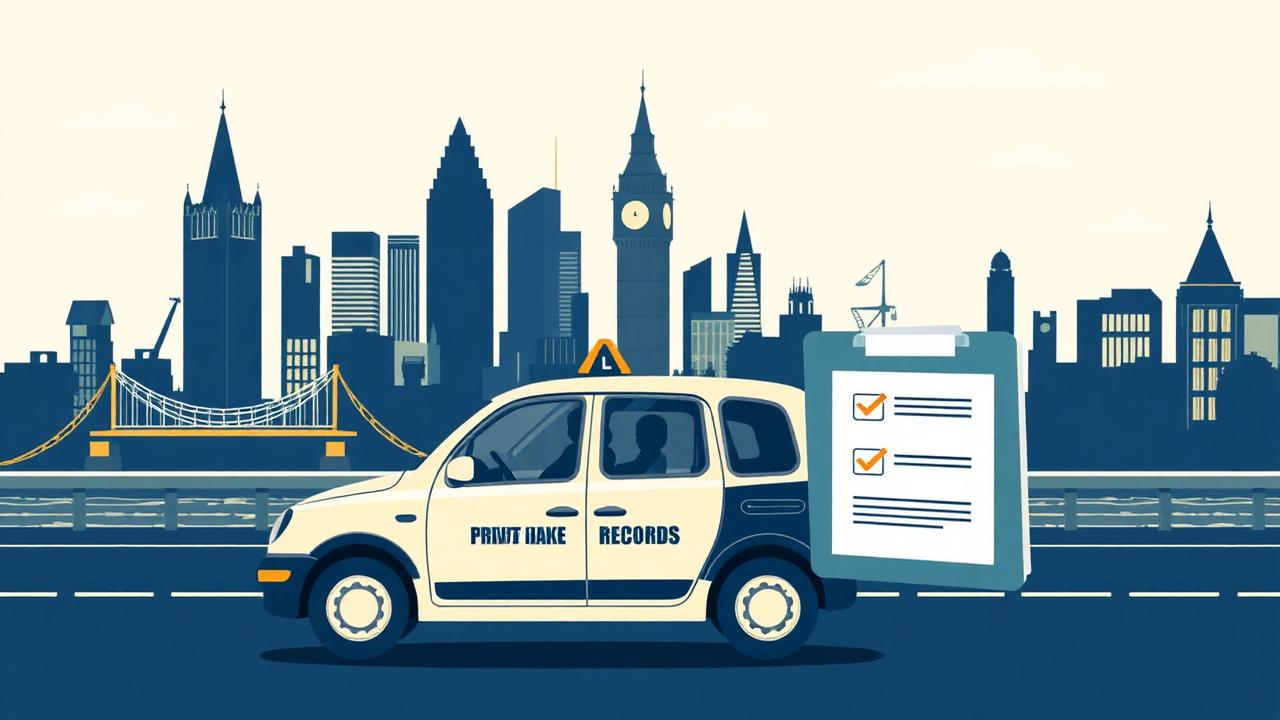
What does a TfL operator licence actually oblige you to record?
The core principle of London private hire regulation is pre-booking. A journey must be accepted and recorded by a licensed operator before the passenger gets in the car. That single rule drives most of the record-keeping.
If a booking exists only as a phone conversation or a driver's WhatsApp message, the operator has no record — and the trip looks, on paper, indistinguishable from an illegal hailing.
- Every booking recorded before the journey starts, not after.
- Booking records kept in a form that can be inspected on request.
- Dispatch only to licensed drivers in licensed vehicles.
- Insurance in force for private hire use on every vehicle dispatched.
- Records available at the licensed operating centre.
Which fields belong on every London booking record?
TfL's expectations map cleanly onto a well-designed booking form. If your dispatch software captures the following at the point of acceptance, your record set is in good shape.
The important word is 'at acceptance'. Fields backfilled the next morning are the ones that fail inspection, because the timestamps show them being created after the journey.
- Date and time the booking was accepted.
- Name of the passenger (or the account booking on their behalf).
- Agreed pickup point and time.
- Destination, where known at booking.
- Any fare quoted or agreed in advance.
- The driver allocated, by licence number.
- The vehicle allocated, by licence plate.
- Whether the booking was sub-contracted to another licensed operator, and to whom.
How should sub-contracted bookings be recorded?
London operators routinely pass work to other licensed operators at peak. The obligation does not transfer with the job: you accepted the booking, so your record has to show that you accepted it and who you passed it to.
Record the receiving operator's name and licence number, the time you passed it, and their reference. A single free-text note is not enough — make them structured fields so they appear in exports.
What about advance bookings months ahead?
Weddings and corporate roadshows are often booked six months out, before you know which driver will run them. Record the booking immediately with the fields you have, then record the driver and vehicle allocation as a dated event when it happens.
Two timestamps — booking accepted and driver allocated — are exactly what an inspector wants to see. One rewritten record with a single timestamp is not.
Which driver and vehicle credentials must be tracked with expiry dates?
The commonest London compliance failure is not a missing record — it is a dispatch to a driver whose licence, DBS or medical lapsed, or a vehicle whose MOT or private hire licence expired last week.
Every one of these is an expiry date. Software that stores them as dates and warns you in advance eliminates the entire failure class.
- TfL private hire driver licence number and expiry.
- DVLA driving licence and periodic check date.
- Enhanced DBS status and renewal date.
- Medical certification date where required.
- Topographical / English language requirement evidence as applicable.
- TfL private hire vehicle licence and expiry.
- MOT date and next-due date for the vehicle's age and use.
- Hire and reward insurance certificate with expiry and cover confirmation.
How does UK data protection change what you store?
Booking records contain passenger names, addresses and journey history — personal data under UK GDPR. You have a legitimate reason to hold it, and a regulatory obligation to retain it, but that does not make retention indefinite by default.
Write the retention rule down, apply it in the system, and make sure your software vendor's data processing agreement matches what you tell passengers in your privacy notice.
- Define a retention period that satisfies TfL, HMRC and civil claim windows.
- Restrict who in your team can export full passenger histories.
- Hold a data processing agreement with your dispatch software vendor.
- Be able to answer a subject access request without a database dump.
- Keep passenger data out of drivers' personal phones — use the driver app, not text messages.
What does a compliance inspection actually look like?
A TfL compliance visit to an operating centre is not adversarial by default. The officer asks for records, picks a date range, and checks that the bookings, drivers and vehicles reconcile.
Operators who pass in an hour have one thing in common: a single system with an export button. Operators who spend a week have their bookings in one place, driver documents in a folder, and insurance certificates in email.
- Prepare a standard export: bookings for any date range with driver and vehicle licence numbers included.
- Keep a current credential status report you can print on demand.
- Store scanned licences, MOTs and insurance certificates against the driver or vehicle record, not in a shared drive.
- Run a self-audit twice a year on a random week.
How do you configure Limozoft for a London operator licence?
The configuration is quick because the model is the same one Limozoft uses everywhere: bookings with mandatory pre-journey fields, drivers and vehicles with expiry-tracked credentials, and CSV export on any date range.
Set booking acceptance timestamps to be system-generated and non-editable, mark driver licence, PHV licence, MOT and insurance as required expiry fields, and enable warnings 30 days out. That covers the great majority of what an inspection looks at.
- Mandatory at booking: passenger, pickup, time, destination, quoted fare.
- Immutable acceptance timestamp, separate from allocation timestamp.
- Structured sub-contract fields: receiving operator, licence number, reference.
- 30-day expiry warnings on all driver and vehicle credentials.
- Role-based access so only owners and managers export passenger histories.
London PHV records: what to store and where
| Record | Captured when | Expiry-tracked? | Shown at inspection |
|---|---|---|---|
| Booking acceptance | Before journey | No | Always |
| Passenger + pickup + destination | At booking | No | Always |
| Quoted fare | At booking | No | Usually |
| Driver allocation | At allocation | No | Always |
| PHV driver licence | Driver onboarding | Yes | Always |
| DBS / medical | Driver onboarding | Yes | Often |
| PHV vehicle licence | Vehicle onboarding | Yes | Always |
| MOT | Vehicle onboarding | Yes | Always |
| Hire & reward insurance | Vehicle onboarding | Yes | Always |
| Sub-contract reference | At sub-contract | No | On dispute |
Pros and cons
Pros
- Pre-journey booking records remove the single biggest London compliance risk.
- Expiry-tracked credentials prevent dispatch to an unlicensed driver or vehicle.
- Separate acceptance and allocation timestamps satisfy advance-booking scrutiny.
- Structured sub-contract fields keep the record chain intact at peak.
- One export answers most of an inspection.
Cons
- Drivers used to informal WhatsApp jobs need retraining onto the app.
- Scanning and dating historical documents is a one-off manual push.
- Retention policy needs legal input; software can enforce it but not choose it.
- Requirements evolve — review your configuration against TfL guidance annually.
Original data · Limozoft operator research 2026
UK operators in Limozoft demo calls averaged 4 different places where compliance documents were stored — email, a shared drive, the old dispatch system, and a physical folder.
Consolidating them into driver and vehicle profiles took under a day for fleets of 5–15 vehicles, and removed the most common cause of a scramble before an inspection: an insurance certificate nobody could find.
Keep exploring on limozoft.com
TfL private hire compliance software →
The London-specific feature set and how it is configured.
UK chauffeur dispatch software →
Pricing and features for UK operators.
Security & data ownership →
Data processing, retention and export commitments.
Book a demo →
See credential expiry warnings and the inspection export.
Frequently asked questions
Is this legal advice?+
Does every booking really have to be recorded before the journey?+
How do I record a booking a passenger changes at the door?+
What if I sub-contract to another operator?+
How long do I keep booking records?+
Can drivers hold passenger details on their own phones?+
Does Limozoft track MOT, DBS and insurance expiry?+
Will my records export in a format an inspector accepts?+
Ready to see it live?
Book a 20-minute demo tailored to your fleet.
Same-week launch · month-to-month · everything included.
Related reading

Compliance · 11 min
NYC TLC Licensing for Black Car Operators: What Your Software Has to Record (2026)
Operations · 11 min
How to Export Your Data Out of Limo Anywhere (Step-by-Step, 2026)

Compliance · 11 min
California CPUC TCP Compliance: What Records Your Limo Dispatch Software Must Keep (2026)

Operations · 10 min
A2P 10DLC Registration for Limo Operators: Why Your Ride Texts Stop Delivering
Where to go next on Limozoft
- Limo Anywhere pricing, broken down line by line — what the bill really comes to once add-ons are stacked.
- Limozoft pricing — $399 one-time + $10–$40/mo with every feature included.
- Limozoft vs Limo Anywhere — the 2026 head-to-head on pricing, setup time, driver app and contract terms.
- Best dispatch software for small limo operators (1–15 vehicles).
See Limozoft on your own reservation data.
20-minute walkthrough. No slide deck. Same-week launch.
Book a free demo →