
Operations · Aug 26, 2026 · 10 min read
WhatsApp Booking for Chauffeur Companies: Turning Chats Into Confirmed Jobs
By Limozoft Editorial · Reviewed by Limozoft operator research team.
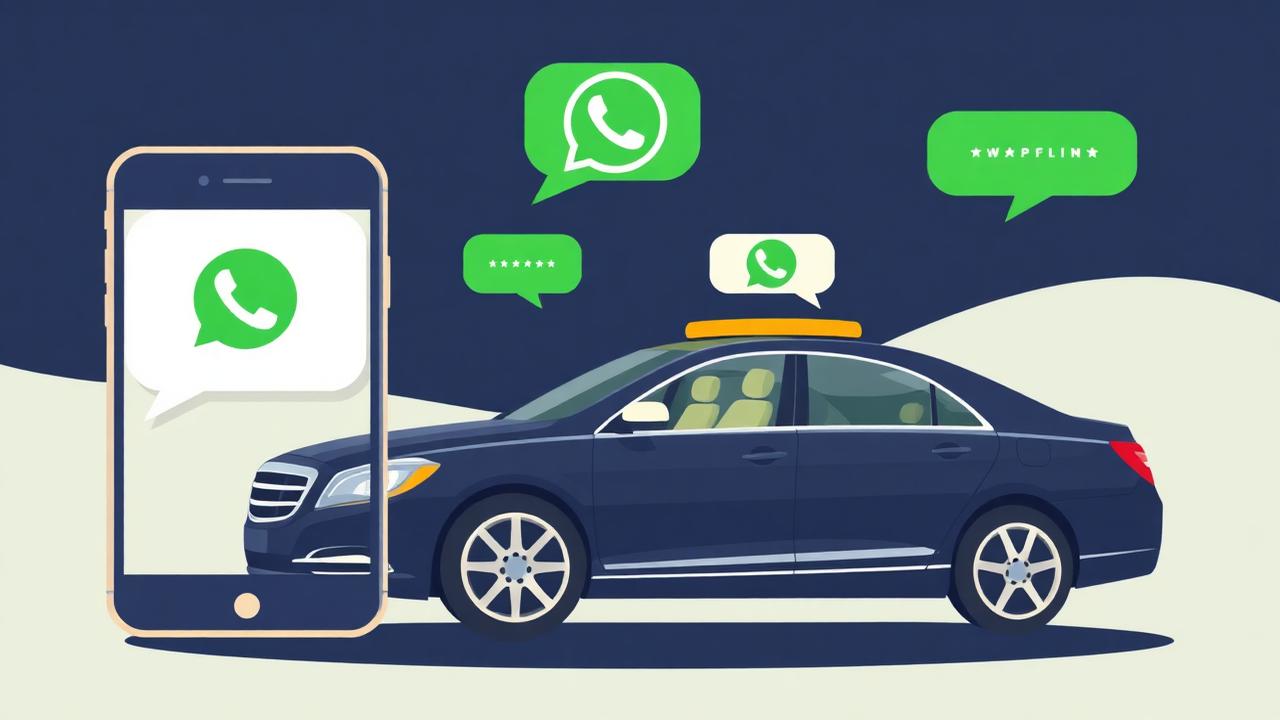
Why do passengers book by WhatsApp at all?
Because it is where they already are, it works across borders without SMS charges, and it lets them send a flight number, a hotel address and a change of plan in one thread.
For airport and corporate work in particular, WhatsApp is often faster for the passenger than any booking form. Fighting it costs you jobs.
- No international SMS cost for travelling passengers.
- Threaded history the passenger can scroll back through.
- Easy to forward flight details, addresses and photos.
- Read receipts reduce 'did you get my message' calls.
What goes wrong when WhatsApp is the record?
Everything that goes wrong when any booking lives outside the dispatch system, plus a few problems specific to chat.
The worst is silent divergence: a passenger changes a pickup time in the thread, the person who read it is off shift, and the driver goes at the original time.
- Changes agreed in chat that never reach the dispatch board.
- Threads on one person's phone, invisible to the rest of the team.
- No audit record for regulators, who expect a booking record.
- Passenger data on personal devices — a data protection problem.
- No structured fields, so nothing is reportable.
What does a disciplined WhatsApp intake process look like?
One shared business number, one fixed question set, one confirmation format, and one hard rule: no booking reference, no dispatch.
The question set is what turns a conversation into data. Ask the same six things every time, in the same order, and the person creating the record never has to scroll back.
- Pickup date and time, with time zone if international.
- Pickup address, including terminal and flight number for airports.
- Destination address.
- Passenger count and luggage.
- Passenger name and contact number for the driver.
- Payment method or corporate account reference.
What should the confirmation message contain?
Always the booking reference from your dispatch system, because that reference is what makes every later message in the thread resolvable.
A good template: 'Confirmed — booking LZ-4821. Tue 14 Oct, 06:15 pickup at 12 Rue de Rivoli for CDG Terminal 2E, 2 passengers, 3 bags. Mercedes E-Class. Total EUR 145 including tolls. Reply to this message to change anything.'
How do you handle changes in the thread?
Acknowledge, update the dispatch record, then re-confirm with the reference and the changed field. Three steps, always in that order.
Never acknowledge a change without updating the record first — the acknowledgement is the passenger's evidence that it is handled.
Should you use a business number or the WhatsApp Business API?
A single shared WhatsApp Business number on a dedicated device works fine up to a modest volume and costs nothing. It is the right starting point for most fleets under about ten vehicles.
Beyond that, the API route gives you multiple agents on one number, message templates for outbound notifications, and integration into your dispatch system — at the cost of provider fees and a template approval process.
- WhatsApp Business app: free, one device, fine at low volume.
- API via a provider: multi-agent, template messages, integration, per-message fees.
- Outbound notification templates require approval before use.
- Opt-in rules apply to business-initiated messages.
Where does WhatsApp fit against the booking widget?
They serve different moments. The widget converts a visitor who found you on Google and wants a price now; WhatsApp serves a passenger already in a relationship with you, often mid-trip.
Run both. Put the widget on the site for acquisition, and use WhatsApp for repeat and corporate passengers who will not fill in a form for the ninth time.
- Widget: new visitors, quotes, self-service, out of hours.
- WhatsApp: repeat passengers, changes, airport arrivals, corporate bookers.
- Both must terminate in the same dispatch record.
- Link to the widget from the WhatsApp thread for first-time price quotes.
How does Limozoft support this?
Limozoft's WhatsApp booking bot workflow captures the six intake fields conversationally and creates a structured booking with a reference, so the thread and the record never diverge.
Dispatchers see the booking on the same board as web and phone jobs, and the passenger gets confirmation and driver-status messages against the same reference.
- Conversational intake mapped to structured booking fields.
- Booking reference issued and used in every subsequent message.
- Jobs appear on the same dispatch board as all other channels.
- Passenger data stays in the system, not on a driver's phone.
WhatsApp intake: chat thread vs booking record
| Need | Chat thread alone | Thread + booking record |
|---|---|---|
| Visible to whole team | No | Yes |
| Survives staff turnover | No | Yes |
| Regulator-acceptable record | No | Yes |
| Reportable revenue data | No | Yes |
| Change tracking | Manual scroll | Dated amendments |
| Driver dispatch | Copy-paste | Automatic |
Pros and cons
Pros
- Meets passengers on the channel they already use.
- Strong fit for airport arrivals and international corporate travellers.
- No SMS delivery or roaming cost issues.
- A fixed six-field intake script turns chat into clean data.
Cons
- The free Business app is single-device and does not scale past low volume.
- API templates need approval and carry per-message fees.
- Discipline is a process problem — software helps but does not enforce habits.
- Passenger data on personal phones is a real compliance risk if unmanaged.
Original data · Limozoft operator research 2026
Among Limozoft operators in Europe and the Gulf, WhatsApp was the single most-cited inbound booking channel for repeat corporate passengers — ahead of both phone and the website form.
The operators who converted it reliably all did the same thing: a fixed intake question set and a confirmation message containing the dispatch reference. The ones who struggled were the ones treating the thread as the booking.
Keep exploring on limozoft.com
WhatsApp booking bot →
Conversational intake that creates a real dispatch record.
Booking widget →
Self-service quoting and booking on your own website.
Dispatch console →
One board for web, phone and WhatsApp jobs.
Book a demo →
See a WhatsApp thread become a dispatched job.
Frequently asked questions
Is WhatsApp booking legal for private hire operators?+
Do I need the WhatsApp Business API?+
How do I stop drivers taking bookings on their own WhatsApp?+
What about passenger data protection?+
Can WhatsApp send driver-on-the-way notifications?+
Does Limozoft turn WhatsApp chats into bookings automatically?+
Ready to see it live?
Book a 20-minute demo tailored to your fleet.
Same-week launch · month-to-month · everything included.
Related reading
Operations · 10 min
Missed Calls Are Your Biggest Leak: AI Phone Agents for Limo Operators
Operations · 10 min
A2P 10DLC Registration for Limo Operators: Why Your Ride Texts Stop Delivering

Operations · 7 min
Increase Repeat Customers Using Chauffeur CRM
Operations · 8 min
How Chauffeur Companies Automate Daily Operations (2026 Playbook)
Where to go next on Limozoft
- Limo Anywhere pricing, broken down line by line — what the bill really comes to once add-ons are stacked.
- Limozoft pricing — $399 one-time + $10–$40/mo with every feature included.
- Limozoft vs Limo Anywhere — the 2026 head-to-head on pricing, setup time, driver app and contract terms.
- Best dispatch software for small limo operators (1–15 vehicles).
See Limozoft on your own reservation data.
20-minute walkthrough. No slide deck. Same-week launch.
Book a free demo →