
Operations · Aug 28, 2026 · 10 min read
Missed Calls Are Your Biggest Leak: AI Phone Agents for Limo Operators
By Limozoft Editorial · Reviewed by Limozoft operator research team.
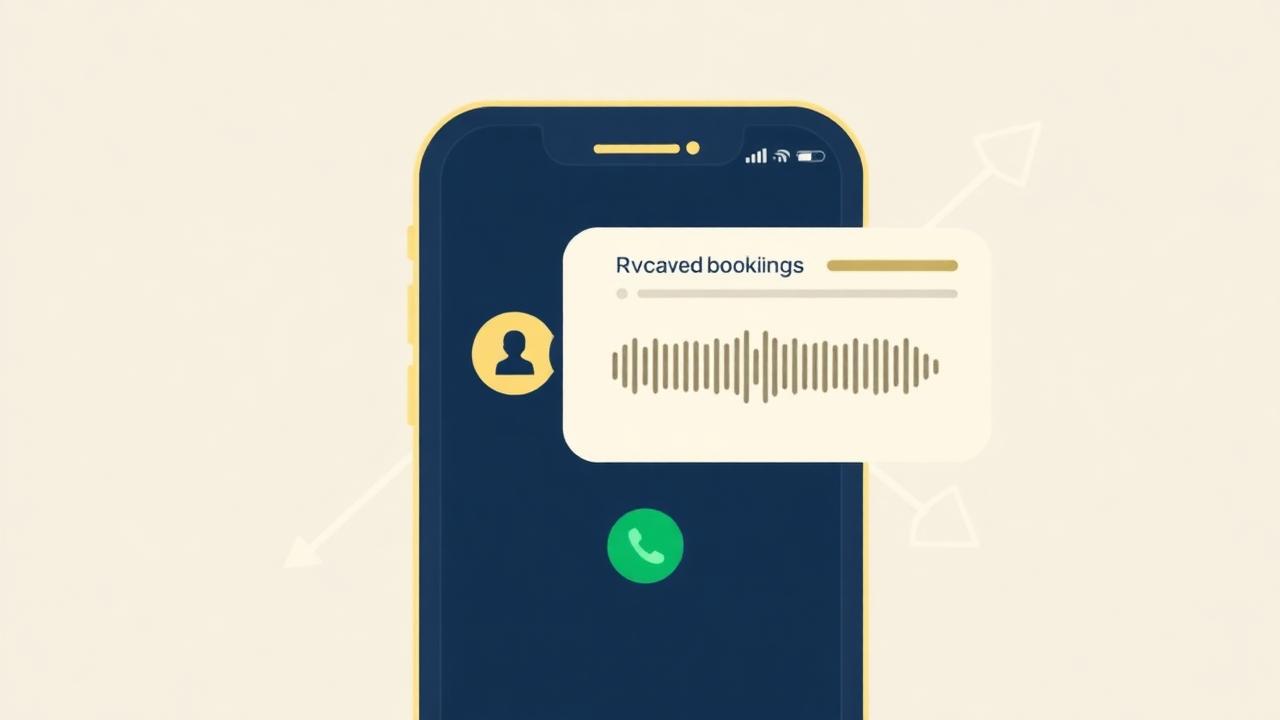
How much does a missed call actually cost?
Do the arithmetic once and the case makes itself. Take your average job value, your typical conversion rate on inbound calls, and the number of calls you miss in a week.
For most small fleets the answer lands between one and four jobs a week — which is more than the entire software budget, several times over.
- Missed calls cluster at exactly the times bookings are most urgent.
- Callers to transport services rarely leave voicemail; they call the next result.
- Corporate bookers under time pressure never call back twice.
- The cost is invisible because it never enters your system.
What can an AI phone agent do well?
Structured intake, at any hour, without fatigue. The tasks below are ones where a well-configured agent matches or beats a rushed human answering a fifth simultaneous call.
The key is scope. An agent given six questions and a clear escalation rule performs; an agent asked to handle anything does not.
- Answer every call within two rings, 24/7.
- Collect pickup time, addresses, passenger count, name and contact.
- Quote standard point-to-point and airport rates from your rate card.
- Create the booking or a complete callback record in the dispatch system.
- Send an SMS or WhatsApp confirmation with the reference.
- Escalate to a human immediately when the caller asks or the request is unusual.
What should it never be asked to do?
The failure modes are all reputational, and they all come from over-scoping. A chauffeur service sells reliability and discretion; an agent improvising on a complaint destroys more value than the calls it saved.
Draw the boundary explicitly in configuration, not in hope.
- Handle complaints or service failures — escalate immediately.
- Negotiate prices or approve discounts.
- Take payment card details over the phone.
- Handle a change to a job already in progress.
- Claim to be a human being if asked.
- Guess at anything — 'I'll have a colleague call you in ten minutes' is always better.
How do you deploy one without damaging service quality?
Start narrow and expand. Overflow and out-of-hours only, for a month, with every call transcript reviewed.
Reviewing transcripts is the whole quality process. Fifteen minutes a day for the first fortnight tells you exactly where the script is failing.
- Phase 1: out-of-hours only.
- Phase 2: overflow when the office line is busy or unanswered after four rings.
- Phase 3: first-line answering with instant escalation on request.
- Review every transcript daily for two weeks, then weekly.
- Track escalation rate — a rising rate means the script needs work, not that the agent is failing.
What should the greeting say?
Name the business, state what it is, and offer the human route immediately. 'Good evening, this is the automated booking line for Limozoft Cars. I can take your booking details now, or say "operator" at any time and I\'ll have someone call you straight back.'
Transparency costs nothing and prevents the one outcome that actually harms you: a caller who feels deceived.
Which metrics tell you it is working?
Answer rate, capture rate and conversion. Answer rate should approach 100 percent; capture rate is the share of answered calls that produce a usable booking or callback record; conversion is the share of those that become jobs.
Compare conversion against your human-answered baseline. If it is close, expand the scope. If it is far below, narrow it and fix the script.
How does it fit with the rest of the intake stack?
Phone, web widget and WhatsApp should all terminate in the same dispatch record, with the same reference format and the same confirmation style.
That consistency is what stops the AI agent from becoming a fourth silo. The passenger should not be able to tell which channel created the record.
- One booking reference format across every channel.
- One confirmation template, adapted to the medium.
- All channels visible on the same dispatch board.
- Escalations land as callback tasks with the transcript attached.
Where an AI phone agent belongs
| Call type | AI agent | Human |
|---|---|---|
| Out-of-hours new booking | Yes | Callback if needed |
| Standard airport quote | Yes | — |
| Overflow during busy period | Yes | Escalate on request |
| Change to a job in progress | No | Yes |
| Complaint | No | Yes, immediately |
| Price negotiation | No | Yes |
| Corporate account setup | No | Yes |
| Card payment | No | Secure link instead |
Pros and cons
Pros
- Recovers revenue that never entered your system before.
- Answers within two rings at 3am with no staffing cost.
- Produces structured records instead of voicemail.
- Escalation-first configuration protects service reputation.
Cons
- Badly scoped agents damage trust faster than missed calls do.
- Requires daily transcript review during the first fortnight.
- Accents, noise and unusual addresses still cause failures.
- Cannot replace a human on complaints or changes in progress.
Original data · Limozoft operator research 2026
Small chauffeur operators reviewing their call logs during Limozoft onboarding typically found unanswered inbound calls concentrated in two windows: 18:00–22:00 and during morning airport peaks.
Both windows are periods when the person who answers the phone is also driving or dispatching. Covering only those two windows recovered most of the identifiable leakage, without any change to daytime staffing.
Keep exploring on limozoft.com
AI agent →
How Limozoft's AI handles booking intake and escalation.
Dispatch console →
Every channel lands on one board with one reference format.
WhatsApp booking bot →
The chat equivalent of the same intake script.
Book a demo →
Hear the agent take a booking end to end.
Frequently asked questions
Will callers know they're talking to an AI?+
Can an AI agent quote prices?+
What happens if it mishears an address?+
Should it take card payments?+
How do I measure whether it's working?+
Where should I start?+
Does this replace my dispatcher?+
Ready to see it live?
Book a 20-minute demo tailored to your fleet.
Same-week launch · month-to-month · everything included.
Related reading
Operations · 10 min
WhatsApp Booking for Chauffeur Companies: Turning Chats Into Confirmed Jobs

Operations · 7 min
Reduce No-Shows with Smart Dispatch Software

Operations · 7 min
Increase Repeat Customers Using Chauffeur CRM
Operations · 8 min
How Chauffeur Companies Automate Daily Operations (2026 Playbook)
Where to go next on Limozoft
- Limo Anywhere pricing, broken down line by line — what the bill really comes to once add-ons are stacked.
- Limozoft pricing — $399 one-time + $10–$40/mo with every feature included.
- Limozoft vs Limo Anywhere — the 2026 head-to-head on pricing, setup time, driver app and contract terms.
- Best dispatch software for small limo operators (1–15 vehicles).
See Limozoft on your own reservation data.
20-minute walkthrough. No slide deck. Same-week launch.
Book a free demo →