
Article
9 Best Dispatch Software Options for Fleet Operators in 2026
If you're running a chauffeur, limo, taxi, or shuttle fleet, you already know the pain of juggling reservations, driver assignments, and corporate billing across three or four disconnected tools. Finding the right dispatch software shouldn't require a demo call with six vendors and a spreadsheet of hidden fees. This guide breaks down the platforms actually worth your time in 2026, based on what matters to owner-operators running 1 to 50 vehicles, not enterprise trucking fleets with a different set of problems entirely.
You want a straight answer to a simple question: which dispatch platform fits your fleet size, your budget, and your existing workflow without forcing you into a painful migration or a per-trip fee structure that eats your margins. We compared pricing models, onboarding speed, and the modules that matter most, booking widgets, driver apps, dispatch consoles, and corporate PO invoicing, so you can see exactly what you're getting before you commit.
Below you'll find nine dispatch software options, including legacy suites like Limo Anywhere (see the ranked shortlist of modern replacements for Limo Anywhere) and newer flat-fee alternatives such as Limozoft, with a breakdown of features, pricing structure, and who each platform actually fits. Whether you're launching your first vehicle or switching off a system that's outgrown your budget, you'll walk away knowing which option deserves a closer look.
1. Limozoft
Limozoft is built specifically for chauffeur, limo, and taxi operators running 1 to 50 vehicles, not adapted from a generic trucking or field service platform. It combines booking, dispatch, driver management, and corporate billing into one connected system, replacing the spreadsheets and disconnected apps most small fleets patch together. For operators tired of Limo Anywhere's module-based pricing or looking at alternatives to Yelowsoft's rigid contracts, Limozoft positions itself as the modern fleet dispatch software alternative built around a flat monthly fee.
How it works
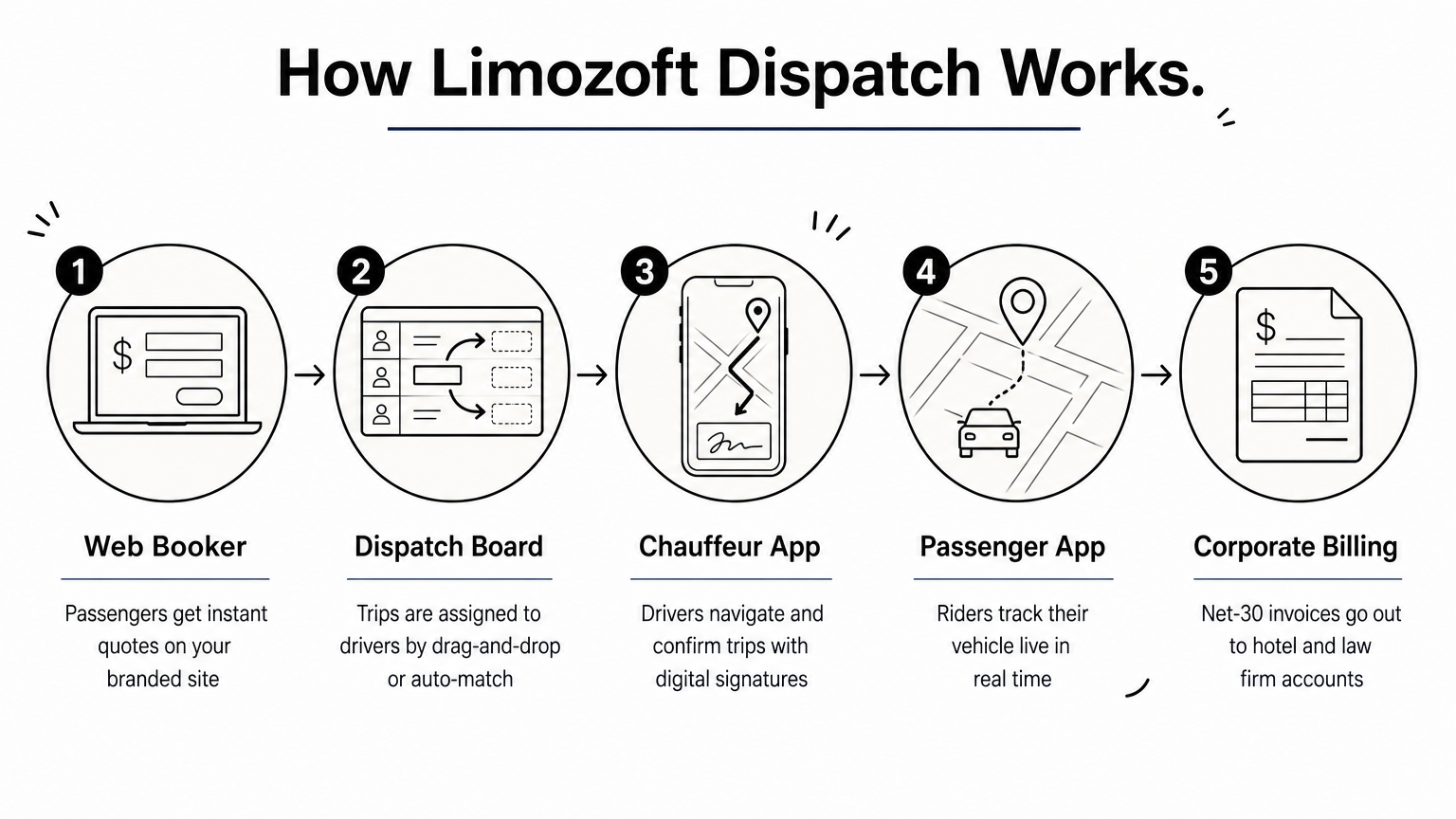
Operators start with a white-labelled Web Booker embedded on their own site, giving passengers instant quotes for airport runs, hourly charters, or point-to-point trips. Bookings flow directly into a real-time drag-and-drop limousine dispatch board where you drag and drop trips to available drivers, or let auto-assignment handle it based on proximity and availability. Drivers get a native app for navigation and digital signatures, while passengers track their vehicle live through a companion app. Migration from an existing platform, including customer records, reservations, and rate tables, is handled by Limozoft's team rather than left to you.
Key features
- Embeddable Web Booker with card capture, saved payment methods, and Apple/Google Pay
- Passenger app with live tracking, chauffeur details, and rebooking
- Chauffeur app with turn-by-turn navigation and trip status updates
- Dispatch console with conflict detection, flight tracking, and farm-in/farm-out
- Corporate PO invoicing and net-30 billing for hotel and law firm accounts
- Direct Stripe payouts to your own bank account, not a vendor-controlled merchant service
A dispatch platform is only worth switching to if it replaces every spreadsheet you're currently juggling, not just one of them.
Best for
Limozoft fits owner-operators and small teams running chauffeur, limo, party bus, or airport transfer businesses who want one platform instead of four separate subscriptions. It also suits operators actively comparing taxi dispatch software for fleets of 1 to 20 vehicles after outgrowing a legacy suite, since Limozoft's migration process is free on annual plans and typically launches the same week you sign up.
Pricing
Limozoft charges a one-time $399 setup fee plus $10 to $40 per month depending on fleet size, well under what dispatch software usually costs at that fleet size. There are no per-trip fees, no per-driver seat charges, and no long-term contract, everything runs month-to-month. A live demo is available on request before you commit.
2. Geotab
Geotab is one of the largest telematics providers in North America, and it shows up on almost every shortlist for fleet dispatch software because of its sheer scale of GPS tracking data. It's not built specifically for chauffeur or taxi operators, but larger fleets running mixed vehicle types often pair it with a separate booking or dispatch layer.
How it works
Geotab installs a small telematics device (a GO device) into each vehicle, which streams engine diagnostics, location, and driver behavior data into the MyGeotab platform. Fleet managers view everything from a web dashboard, and the open API lets developers connect the data to third-party dispatch or routing tools rather than relying on Geotab's own dispatch features.
Key features
- Real-time GPS tracking and historical route playback
- Engine diagnostics and maintenance alerts
- Driver safety scoring and harsh-braking reports
- Open API and Marketplace for third-party integrations
Telematics data only becomes useful once it feeds a dispatch workflow your team actually uses every day.
Best for
Geotab suits larger, mixed-vehicle fleets that already have a dispatch or booking system and need deep vehicle diagnostics layered on top, not startups looking for an all-in-one platform.
Pricing
Geotab doesn't publish flat pricing. Costs depend on hardware, plan tier, and fleet size, and you'll need a quote from a reseller, which adds friction for smaller operators comparing straightforward monthly rates.
3. Connecteam
Connecteam started as a general workforce management app, not a dispatch platform, but plenty of small fleets use it to schedule shifts, track hours, and message drivers because it's cheap and flexible. It shows up in dispatch software comparisons mostly because operators without a real-time dispatch console lean on it to cover scheduling gaps.
How it works
Managers build schedules in a drag-and-drop calendar, assign shifts to drivers, and push updates through an in-app chat. Drivers clock in through GPS-verified time tracking, and dispatchers can attach job details or routes manually, since there's no automated trip-matching engine behind it.
Key features
- Shift scheduling with drag-and-drop assignment
- GPS time clock and timesheet exports
- In-app team chat and task checklists
- Custom forms for inspections or incident reports
A scheduling app can cover shifts, but it can't replace a dispatch console built to route live trips.
Best for
Connecteam fits small teams that need basic shuttle dispatch software functionality bolted onto a broader workforce tool, particularly operators who don't run high trip volume and don't need automated booking or live passenger tracking.
Pricing
Connecteam offers a free plan for up to 10 users, with paid plans starting around $29 per month for the first 30 users, then scaling per additional user. That per-seat structure can get expensive fast once you add dispatchers, drivers, and office staff to the same account.
4. Onfleet
Onfleet built its reputation on last-mile delivery routing, not passenger transportation, but some shuttle and courier-adjacent fleets use it as route optimization dispatch software when they need automated stop sequencing rather than live trip-by-trip assignment. It's worth knowing about because operators researching dispatch software often land on it by mistake, expecting the chauffeur-specific tools a reservation-led fleet actually needs, which it simply doesn't offer.

How it works
Dispatchers upload delivery or stop lists, and Onfleet's routing engine sequences them for the fastest completion time across a fleet of drivers. Drivers follow turn-by-turn directions in a native app, mark stops complete, and capture proof of delivery, while customers get automated SMS updates with a live tracking link.
Key features
Onfleet leans hard into route efficiency and delivery confirmation rather than reservation management or corporate billing.
- Automated route optimization for multi-stop deliveries
- Proof of delivery with photos and signatures
- Customer SMS notifications with live tracking links
- Analytics dashboard for on-time performance
Route optimization software solves stop sequencing, not passenger reservations, corporate accounts, or hourly charter bookings.
Best for
Operators running courier, parcel, or food delivery routes fit Onfleet well. Chauffeur, limo, and taxi businesses looking for booking widgets or corporate PO invoicing won't find those features here.
Pricing
Pricing starts around $500 per month for a base plan covering a limited number of tasks and drivers, scaling upward with volume. There's no free tier, and the per-task pricing model can surprise fleets with unpredictable monthly bills.
5. Truckbase
Truckbase is a transportation management system (TMS) built for small to midsize truckload carriers, not passenger fleets, but it keeps surfacing in dispatch software searches because freight operators face a similar problem: too many disconnected spreadsheets and load boards. If you run a chauffeur or taxi business, this one isn't for you, but it's worth understanding why it doesn't fit before you waste a demo call.
How it works
Dispatchers load freight details into Truckbase, assign loads to drivers and trucks, and track each shipment from pickup to delivery through a centralized dashboard. The platform pulls in load board integrations, automates driver settlement calculations, and generates rate confirmations and invoices tied to each haul, functions that don't map onto hourly charters or airport transfers at all.
Key features
- Load tracking from dispatch to delivery
- Automated driver settlements and payroll exports
- Load board integrations for finding freight
- Digital rate confirmations and invoicing
Freight dispatch software and passenger dispatch software solve different problems, even when both call themselves a TMS.
Best for
Truckbase suits small trucking carriers hauling freight loads, not chauffeur, limo, or taxi operators managing passenger reservations and corporate accounts on software built for 1 to 15 vehicle fleets. If your fleet moves people rather than pallets, keep looking.
Pricing
Truckbase doesn't publish flat rates publicly. Carriers typically go through a sales call to get a quote based on fleet size and modules needed, which mirrors the same friction small chauffeur operators try to avoid with legacy platforms.
6. ITS Dispatch by Truckstop
ITS Dispatch by Truckstop is another freight-focused dispatch tool, built for small trucking companies and freight brokers, not passenger fleets. It keeps popping up in dispatch software searches because Truckstop's load board is a household name in trucking, but chauffeur and taxi operators won't find anything here that maps to reservations, hourly charters, or corporate accounts.
How it works
Brokers and carriers post or search loads directly through Truckstop's board, then manage each shipment inside ITS Dispatch, from driver assignment through invoicing. Everything ties back to freight movement, pickup and delivery times, mileage, and settlements, rather than trip bookings or passenger communication.
Key features
- Load board access integrated with dispatch records
- Automated mileage and rate calculations
- Carrier and driver settlement tracking
- Document management for bills of lading and invoices
If your dispatch software talks in loads and mileage instead of trips and passengers, it's built for freight, not fares.
Best for
Small freight carriers and brokers who already use Truckstop's load board and want dispatch functions in the same ecosystem. It's not built for shuttle, limo, or taxi needs, and trying to force passenger workflows into it wastes time better spent evaluating the taxi dispatch platforms ranked for small and mid fleets.
Pricing
ITS Dispatch pricing depends on the plan tier and whether you bundle it with Truckstop's load board subscription. Expect a sales conversation rather than published flat rates, since pricing scales with the number of trucks and load board access level you need.
7. Tenna
Tenna is construction equipment tracking software, built for contractors managing bulldozers, excavators, and mixed heavy equipment fleets, not passenger vehicles. It shows up in dispatch software searches because construction firms use similar language, tracking assets, scheduling jobs, and dispatching operators to sites, but the workflow underneath has nothing to do with trip bookings or rider communication.
How it works
Companies tag equipment and vehicles with GPS trackers or QR codes, then log usage, location, and maintenance needs inside Tenna's platform. Managers schedule equipment moves between job sites, track utilization rates, and get maintenance alerts based on engine hours rather than mileage. There's no passenger-facing booking widget or trip dispatch console anywhere in the system.
Key features
- GPS and QR-code asset tracking across job sites
- Maintenance scheduling based on engine hours
- Equipment utilization reporting
- Job site assignment for operators and machinery
Asset tracking software manages where your equipment sits, not where your passengers need to go.
Best for
Tenna fits construction and heavy equipment companies juggling dozens of machines across multiple sites. Chauffeur, limo, or shuttle operators searching for modern chauffeur dispatch software should look elsewhere, since Tenna has no reservation, corporate billing, or passenger tracking features at all.
Pricing
Tenna doesn't list flat public pricing. Plans are quoted based on the number of tracked assets and hardware needed, which typically means a sales call before you see a real number, another friction point for operators used to comparing straightforward monthly rates.
8. Service Fusion
Service Fusion is field service management software built for HVAC, plumbing, and electrical contractors, not passenger transportation companies. It lands on dispatch software lists because it handles job scheduling and technician dispatch well, but a chauffeur or shuttle operator won't find booking widgets, hourly charter rates, or passenger tracking anywhere in the product.
How it works
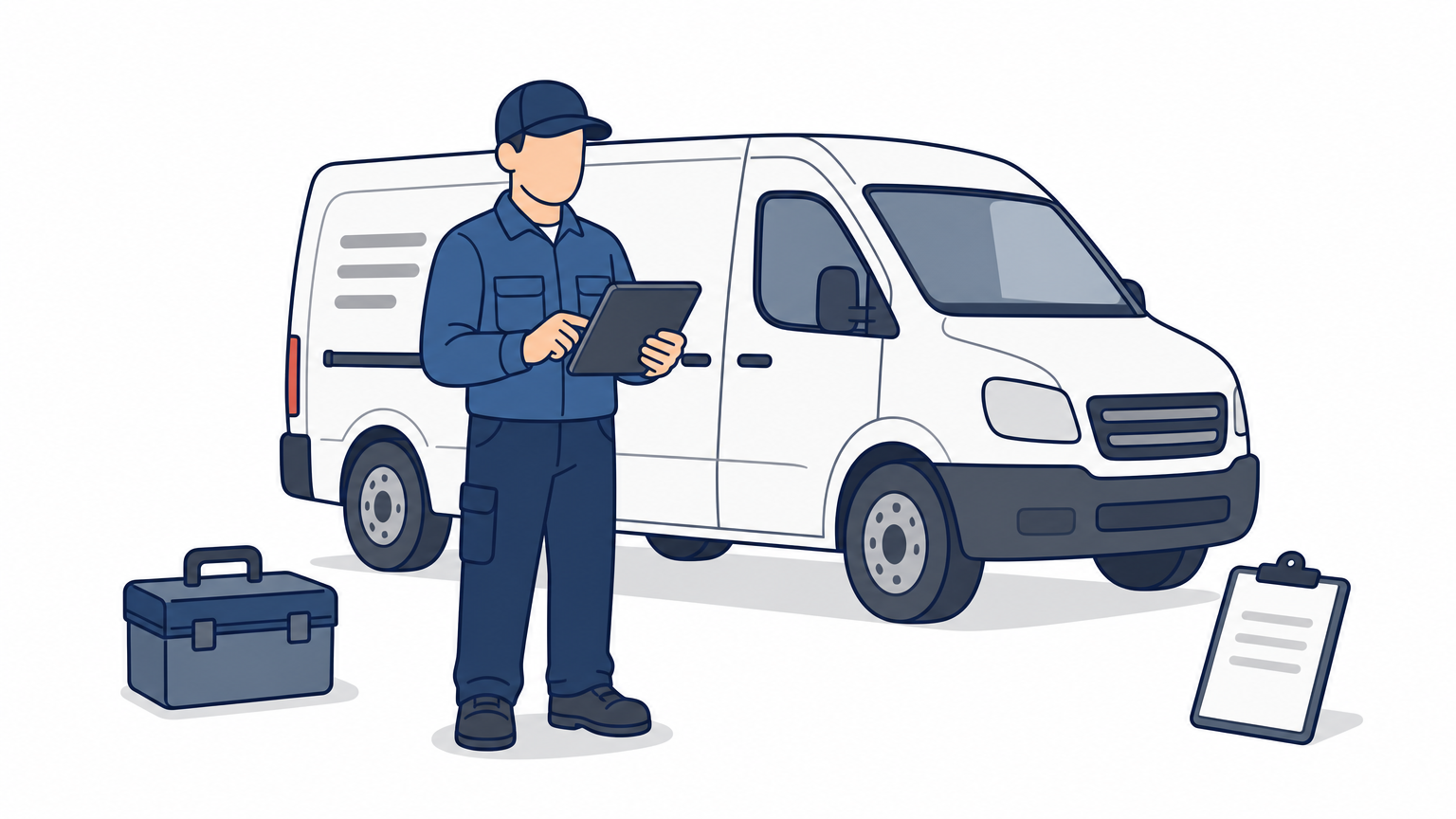
Office staff create work orders for service calls, then assign each job to a technician through a visual dispatch board that shows availability and location. Technicians receive job details on a mobile app, update status as they work, and capture signatures or payment on-site. The system ties everything back to invoicing and customer history, which works well for repeat service calls but has no concept of a passenger reservation or a corporate PO account.
Key features
- Drag-and-drop dispatch board for technician scheduling
- GPS tracking of field technicians
- Estimating and invoicing tied to each job
- VoIP phone integration for call tracking
Field service dispatch software schedules jobs and technicians, not passengers and chauffeurs.
Best for
Service Fusion suits HVAC, plumbing, electrical, and similar trade businesses managing service calls, not limo, taxi, or shuttle fleets. If you're comparing limo software built for passenger transport, this isn't the platform to shortlist.
Pricing
Service Fusion publishes tiered plans starting around $199 per month for a starter package, with higher tiers adding features like advanced reporting and additional user seats. Pricing scales by user count rather than fleet size, which doesn't map cleanly onto vehicle-based operations.
9. Trimble Transportation
Trimble Transportation is enterprise-grade trucking dispatch software, built for large freight carriers running hundreds of trucks, not passenger fleets of any size. It rounds out this list because Trimble's name carries weight in logistics circles, and operators researching dispatch software sometimes assume its scale means it fits every transportation business. It doesn't, and chauffeur or taxi operators evaluating it will find nothing built for reservations or riders.
How it works
Carriers run Trimble's suite (TMW, Innovative, or PeopleNet, depending on which product line they land on) to manage load planning, driver dispatch, and compliance tracking across large trucking operations. Dispatchers assign loads based on driver hours-of-service data pulled from ELD integrations, and the system generates settlements, fuel tax reporting, and safety compliance documents tied to federal trucking regulations rather than passenger trip records.
Key features
- Load planning and driver dispatch across large freight fleets
- ELD integration for hours-of-service compliance
- Fuel tax (IFTA) reporting and safety compliance tracking
- Enterprise-level analytics across multiple terminals
Enterprise trucking software solves compliance and load planning at scale, problems a five-vehicle limo fleet doesn't have.
Best for
Trimble suits large freight carriers with dedicated compliance and dispatch teams, not owner-operators running chauffeur, limo, or shuttle fleets. If you're weighing the dispatch platforms ranked for small limo operators with a fleet under 50 vehicles, the complexity here works against you rather than for you.
Pricing
Trimble doesn't publish flat pricing anywhere. Enterprise contracts require a sales consultation, and costs scale with terminal count, module selection, and fleet size, putting it well outside the budget range small operators typically consider.
Finding the right fit for your fleet
Most of the platforms on this list solve a real problem, just not yours. Geotab, Truckbase, ITS Dispatch, Tenna, Service Fusion, and Trimble were all built for freight, equipment, or field service, and forcing a passenger business into that mold means paying for features you'll never touch. Connecteam and Onfleet come closer, but neither one handles booking widgets, corporate PO invoicing, or hourly charter rates the way a purpose-built platform should.
Unless your fleet hauls freight or dispatches HVAC techs, the real shortlist for chauffeur, limo, taxi, and shuttle operators comes down to legacy suites versus flat-fee alternatives built for your exact fleet size. Choosing between them means weighing setup speed, contract flexibility, and whether you're paying for four separate modules or one connected system.
Ready to see it in action? Book a live demo of Limozoft's limo dispatch software and find out how fast your fleet can launch this week.
See Limozoft on your own reservation data.
30-minute walkthrough. No slide deck. Launch in 5 working days.
Book a free demo →