
Operations · Oct 26, 2026 · 9 min read
From Dispatch to Drop-Off: Following One Limo Trip Through Limozoft
By Limozoft Editorial · Reviewed by Limozoft operator research team.

What does one trip actually go through?
Take an ordinary job: a passenger books an airport pickup on Tuesday for a Friday morning arrival. Nothing about it is unusual, which is why it is a good test of any dispatch system. If one routine trip needs a phone call to move from one stage to the next, a busy Friday will need forty of them.
The example below is illustrative, but every stage in it maps to a feature Limozoft documents on its dispatch, driver app, tracking and payments pages.
How does the dispatcher assign the job?
On the drag-and-drop board, every run for today, tomorrow and next week sits on one timeline. Auto-assignment suggests a driver by proximity, vehicle class, the passenger's preferred-driver history and affiliate priority. The dispatcher accepts in one click or overrides.
The board also flags overlapping runs before you save them. That check matters more than the suggestion, because a double-booked chauffeur is the mistake a person under pressure is least likely to catch alone.
What does the chauffeur see?
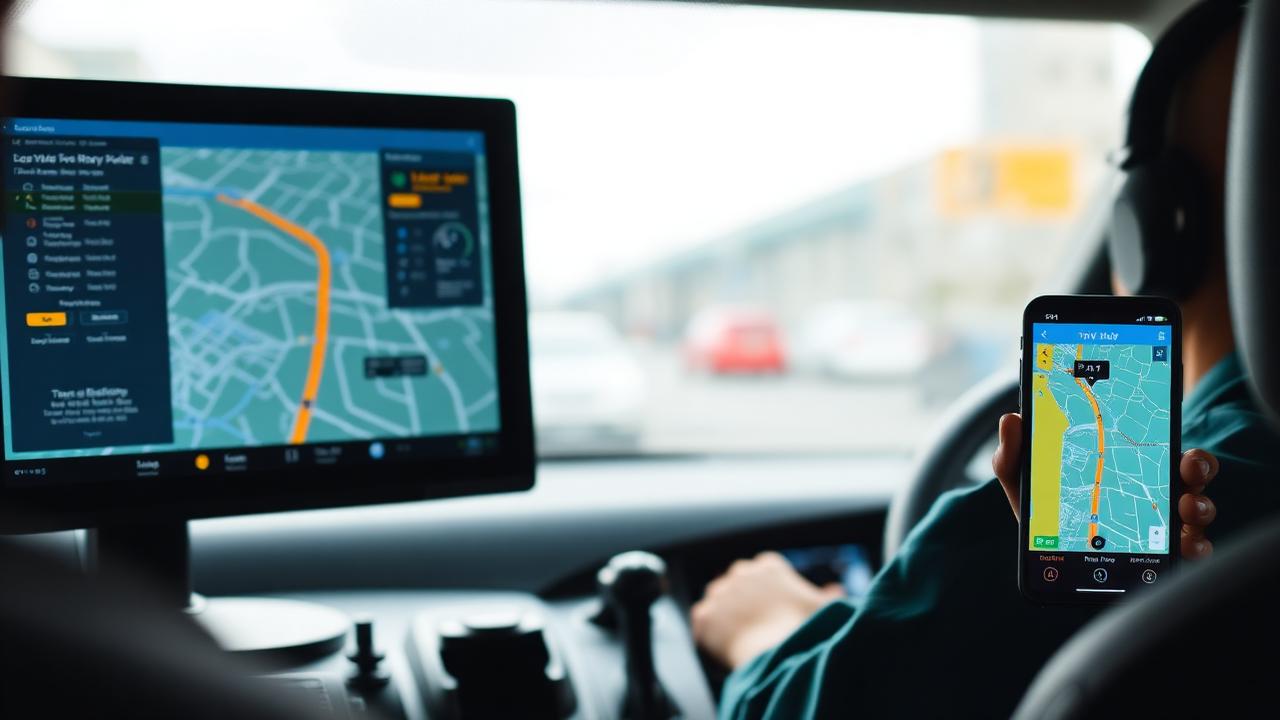
A trip card with the pickup and drop-off, the flight-status card for airport runs, the passenger's number and any special instructions. One tap opens the address in Google Maps, Apple Maps or Waze, so nobody copies and pastes an address while standing at arrivals.
- Today, tomorrow and upcoming runs on the home screen.
- In-app messaging with the dispatch team, instead of a call to the office.
- Signature capture and a photo receipt at drop-off.
What does the passenger see?
Once the chauffeur accepts the run, the passenger gets a live vehicle pin, the chauffeur's name and vehicle details, and a continuously updated ETA. It arrives in the branded passenger app or as a tracking link by SMS or email. For airport pickups, the pickup time follows the actual flight, so an early or delayed landing shifts the schedule rather than producing a missed meeting.
What happens at drop-off and payment?
Card payments run through your own Stripe account, so funds settle directly to your bank. The booking can hold the quoted fare in advance and capture the final amount once the trip sheet closes, with waiting time, extra stops, tolls and gratuity itemised as separate lines. Corporate accounts book against a PO or cost centre and are invoiced on terms, with consolidated monthly invoices built from the same reservation records.
The completed job keeps its status timeline and route history. That is what you reach for when a corporate client disputes a waiting-time charge.
Where does a trip usually go wrong, and what catches it?
Most failures are small, and most are about information arriving late.
- A double-booked driver: overlap detection flags it before the job is saved.
- A delayed flight: the pickup time moves with the flight, and dispatch sees the revised schedule.
- A late chauffeur: the board highlights it before the passenger notices.
- A payment argument: the itemised lines and the stored timeline settle it.
How do you test this in a demo?
Do not watch a scripted trip. Bring one real job from last week and ask to run it end to end: book it, assign it, accept it on a phone, move it through every status, then close and charge it. Count the points where you would normally pick up the phone. That number is the honest measure of what the system removes.
What is the bottom line?
Small workflow changes compound, so fix the step your dispatchers repeat most often first. Limozoft costs $399 one-time plus $10 to $40 a month by fleet size, with no per-trip or per-driver fees, instant email support and a live demo on request. Book a demo to see it on your own bookings.
One airport pickup, stage by stage
| Stage | What happens | Where it shows up |
|---|---|---|
| Booking | The reservation is priced from your rate card, whether it arrives by widget, phone or message | The dispatch board, as a normal reservation |
| Dispatch | The dispatcher assigns a chauffeur, with a suggested match by proximity, vehicle class and preferred driver | The board timeline, with overlap warnings |
| Acceptance | The chauffeur accepts in the driver app | A read receipt on the dispatcher's screen |
| Pickup prep | Flight status, passenger number and special instructions sit on the trip card | The driver app, and the revised time if the flight moves |
| On the way | Status moves from on the way to arrived to passenger on board | The live map, and the passenger's tracking link or app |
| Drop-off | Signature or photo receipt is captured and the status timeline is stored | The completed job record |
| Payment | The held fare is captured, with waiting time and extras added as separate lines | The passenger's receipt, or the corporate invoice |
Pros and cons
Pros
- The whole trip runs from one reservation record, so people stop relaying information by phone.
- Each stage maps to a documented feature, which makes a demo easy to check against your own jobs.
Cons
- A system only removes the calls your team agrees to stop making, so drivers and dispatchers still need a short onboarding.
- Live tracking depends on drivers running their shift in the app.
Keep exploring on limozoft.com
Dispatch board →
Drag-and-drop board with conflict detection.
Driver app →
Trip card, navigation and drop-off proof.
Live tracking →
Live map, passenger ETA and flight tracking.
Payments →
Your Stripe account, itemised extras and corporate invoicing.
Book a demo →
Frequently asked questions
What does a limo dispatch system do from booking to drop-off?+
Can the passenger track the chauffeur?+
What happens if the flight is delayed?+
How are extras like waiting time charged?+
Ready to see it live?
Book a 30-minute demo tailored to your fleet.
launch in 5 working days · month-to-month · everything included.
Related reading
FAQ · 6 min
How Does Limo Dispatch Software Work? (Step-by-Step)

Operations · 8 min
The Airport Transfer Dispatch Playbook (Flight Tracking, Meet-and-Greet, Delays)

Operations · 7 min
The Driver App Adoption Playbook (Getting 100% of Chauffeurs to Actually Use It)
Operations · 8 min
What Software Should I Use to Track My Chauffeur Fleet?
Where to go next on Limozoft
- Limo Anywhere pricing, broken down line by line — what the bill really comes to once add-ons are stacked.
- Limozoft pricing — $399 one-time + $10–$40/mo with every feature included.
- Limozoft vs Limo Anywhere — the 2026 head-to-head on pricing, setup time, driver app and contract terms.
- Best dispatch software for small limo operators (1–15 vehicles).
See Limozoft on your own reservation data.
30-minute walkthrough. No slide deck. Launch in 5 working days.
Book a free demo →