
FAQ · Nov 4, 2026 · 16 min read
Limo & Chauffeur Software in 2026: 40+ Buyer Questions Answered (Cost, Dispatch, Demos, Farm-Out, TCP)
By Limozoft Editorial · Reviewed by Limozoft operator research team.

How much does professional limo software typically cost?
Headline prices run from free tiers to a few hundred dollars a month, but the number to compare is the twelve-month total after setup, passenger app, messaging and per-trip fees. Always model your own trip volume before you sign.
Published examples: Limo Anywhere's Core plan starts at $99/month plus a $299 one-time license fee and per-trip charges, with a branded passenger app at $199 setup plus $99/month (per limoanywhere.com/pricing, October 2026). Limozoft is a one-time $399 build (Starter, 1–5 vehicles), then $10/month, rising to $30 (6–15 vehicles) and $40 (16–50), with the driver app, booking widget and corporate billing included. Stripe card processing is passed through at cost.
- Ask for the twelve-month total, not the monthly headline.
- Check whether the driver app, passenger app, SMS and booking widget are included or billed separately.
- Check for per-trip, per-driver or per-affiliate fees that grow with you.
- Check the contract: month-to-month or annual.
How do you request a demo for dispatch software?

Use the vendor's demo form and send your own scenario so the demo is not a generic tour. For Limozoft, book at limozoft.com/request-demo; the demo shows the booking website and the dispatch back office, and you can ask us to run one of your real airport or corporate trips through it.
Limozoft has no free trial. We offer a live demo on request instead, because a trial of an empty system tells you little about how your own bookings, rates and drivers would behave.
- Bring three real trips: an airport pickup, an hourly booking and a corporate-account job.
- Ask to see the driver app on a phone, not just screenshots.
- Ask what is billed on top of the plan price and what is included.
- Ask how long setup takes and who migrates your customer data.
What software do taxi and limo companies use for dispatch and bookings?
Operators generally use one of three kinds of tool: a limo-specific platform (reservations, dispatch board, driver app, corporate billing), a taxi-focused platform built around meters and ranks, or a marketplace that sends them jobs. Limo and chauffeur work is prearranged, so the first kind fits best.
Common limo names include Limo Anywhere, Moovs, MyLimoBiz (Livery Coach), Yelowsoft, Cabsoluit and Limozoft. For a neutral shortlist method see our guide to the best limo dispatch software in 2026.
What is the best taxi and limousine software based on user feedback and reviews?
There is no single winner, because review sites mix 5-vehicle owners with 500-vehicle bases. Read reviews from operators with your fleet size and check the date: pricing and features change quickly.
Limozoft does not yet have first-party reviews on Capterra, G2 or GetApp, and its own Trustpilot profile is a small sample, so we will not claim a review ranking. What we do publish is exact pricing, limits and a head-to-head method on our comparison pages so you can check the claims yourself.
What are the top-rated taxi dispatch software providers?
For traditional taxi bases with meters, ranks and high-volume street work, larger platforms such as Autocab and iCabbi are common. For prearranged limo, chauffeur and executive work the better match is limo software. Limozoft has no native taximeter, so it is not the right fit for a traditional taxi base.
Which limo software increases bookings and reduces no-shows?
Software cannot create demand by itself, but it removes the reasons bookings are lost: slow quotes, no online booking, unanswered calls and no deposit. It cuts no-shows through card-on-file or deposit capture, automatic confirmations and reminders to passengers and drivers, and flight tracking so pickups follow real arrival times.
- An online booking widget with instant fare quotes that works at midnight.
- Card on file or a deposit at booking, plus a clear cancellation rule.
- Automatic SMS and email confirmations and reminders.
- Flight tracking so airport pickups shift with delays.
- Missed-call capture so no enquiry goes unanswered (see Ava Voice Assistant).
How do you reduce no-shows with limousine dispatch software?
Set the rules first, then let the software enforce them: take a card or deposit at booking, send automatic reminders, and publish a cancellation window. Our no-show policy template and no-show guide walk through wording and settings.
How do you streamline operations using limousine dispatch software?
Move the repeated steps out of phone calls and spreadsheets: online booking feeds the dispatch board, conflict detection stops double-booking, jobs go to the driver app with navigation and job sheets, and completed trips flow into invoices and driver payroll. Fix the step your dispatchers repeat most often first.
Which system has the fastest booking process?
Speed depends on the number of fields a customer must complete, whether the quote is instant, and whether payment is one tap. Measure it yourself: time a booking from the pickup field to the confirmation screen on a phone.
Limozoft's booking widget gives an instant fare quote for airport, hourly and point-to-point trips, supports saved cards and Apple Pay or Google Pay through your own Stripe account, and embeds on your site in minutes. We have not run a published benchmark against other systems, so ask every vendor for a live timed test.
What is the difference between cloud-based and on-premise dispatch systems?
Cloud systems run on the vendor's servers and you use them in a browser or app; on-premise systems run on hardware you own and maintain. Cloud means no servers to patch, access from anywhere, automatic updates and a monthly fee. On-premise can suit strict data-residency rules but adds IT cost and slower updates. Almost all new limo software is cloud-based.
Check where your records live and how you export them before you sign. Limozoft's security and data-ownership page explains retention and export.
How do you choose limousine booking software for a startup?
A startup needs four things on day one: an online booking page that takes a card, a way to assign jobs to drivers, reminders, and an invoice for every trip. Skip anything you will not use in the first six months, and avoid per-trip or per-driver meters that punish growth.
- Flat monthly pricing that does not rise with every trip.
- A native driver app in the base plan.
- Corporate accounts with PO billing available from day one.
- Month-to-month terms and a fast go-live.
What is the best limo software for startups?
For 1–10 vehicle fleets that want one flat bill, Limozoft Starter ($399 one-time, $10/month) covers booking, dispatch, driver app and corporate billing. Moovs offers a free tier for a solo, phone-first start but costs rise on paid tiers and payment processing carries a percentage. Limo Anywhere suits operators whose work already arrives through its network. Compare the twelve-month cost for your own volume.
Which limousine booking software supports corporate client accounts?
Look for PO numbers on every reservation, cost-centre tagging, consolidated monthly or net-30 invoicing, and a client portal for travel managers. Limozoft includes these on every plan rather than behind an enterprise module. Our guide to corporate chauffeur accounts covers PO billing and net-30 in detail.
What does MyLimoBiz offer, and is it legit?
MyLimoBiz (Livery Coach) is a long-established US limo dispatch platform, so yes, it is a real and mature product. Our comparison describes it as deep and proven, priced with a setup fee, per-module add-ons and an annual contract. If your team is trained on it, that depth may be worth keeping.
If you want published flat pricing and a month-to-month term instead, see our Limozoft vs MyLimoBiz comparison. Always confirm current terms with the vendor, as pricing changes.
What is Limo Anywhere, and how does it compare with Autocab?
Limo Anywhere is a US limo software platform with a public pricing page, a trip-volume calculator and its own LA Net farm-in/farm-out network. Autocab is a UK-origin dispatch platform that is strongest at 100+ vehicle private-hire bases. They serve different operators: Limo Anywhere is closer to prearranged chauffeur work; Autocab to high-volume private hire.
For 1–50 vehicle chauffeur fleets leaving either, see our Limo Anywhere alternatives and Autocab alternatives pages. Limo Anywhere's own site is the source of truth for its current plans.
What are the alternatives to vAutomove?
We do not hold verified pricing or feature data for vAutomove, so we will not compare it line by line. Judge any alternative on the same checklist: flat or metered pricing, a native driver app, a booking widget, corporate invoicing, data export and contract length.
For limo and chauffeur work, Limozoft, Moovs and Limo Anywhere are the three most common shortlists for small fleets. Our best dispatch software for small operators guide shows the twelve-month cost of each.
What is the best platform for managing corporate airport transfers worldwide?
Worldwide coverage needs two things: your own software for the work you drive, and a partner network for the cities you do not cover. Limozoft handles flight tracking, corporate accounts, PO billing and branded booking, and LZNet connects you to operators in other cities. A single global platform with its own fleet is a different model.
How does limo farm-out work?

Farm-out means you pass a booking you cannot drive to a partner operator in the right city. They drive it, you keep the customer relationship, and you agree a payout, usually a percentage or fixed price. Farm-in is the reverse: you receive work from another operator.
The steps are the same on any network: offer the trip, the partner accepts, they assign a driver and vehicle, they complete the job, and both sides settle. Networks differ on fees: LA Net lists $0.75 per farmed trip on Core (per limoanywhere.com/pricing, October 2026), while LZNet, built into Limozoft, has no per-trip network fee.
- Agree the price and the trip details in writing before you send it.
- Send passenger contact details only after the partner accepts.
- Record pickup, drop-off and extras so payment is not disputed.
- Settle on a fixed schedule, and keep a ledger of what you owe and are owed.
How do you find limo affiliates?
Start with the network your software already includes, then add local trade associations and operators you meet at airports and events. LZNet has a worldwide directory you can filter by country, city, airport, service and vehicle type, then send a connection request. Limo Anywhere customers use LA Net.
Build two or three trusted partners in each city you are asked about most. A short list of proven partners beats a long directory.
How do you vet limo affiliates?
Check that they can legally carry passengers for hire where they operate, that their insurance is current and covers the vehicle class, and that their drivers meet local checks. Then test them with a low-risk job before you trust them with a corporate client.
- Ask for the operating permit or licence number and verify it with the regulator.
- Ask for a current certificate of insurance and check the dates.
- Confirm vehicle age, class and condition standards match your brand.
- Check references from other operators, not only testimonials.
- Start with a small job and review punctuality and communication.
- Agree payment terms and a written cancellation rule before the first trip.
How do you compare chauffeur services before booking?
For travellers, compare the total price (not the headline rate), what is included such as waiting time, tolls and gratuity, the cancellation window, vehicle class and whether the company tracks your flight. Prefer a company with a clear booking confirmation and a named contact if something goes wrong.
For companies buying corporate transport, ask for the account billing model (PO numbers, consolidated invoicing), reporting, coverage and a single point of contact. A business directory or a travel-manager shortlist is the usual starting point.
What is the most reliable chauffeur booking app for a premium vehicle or short-notice trip?
Reliability comes from the operator, not just the app. Choose a company that confirms your vehicle class in writing, shows live driver status and tracks flights, and answers when you call. For short-notice trips, a company with its own booking website and a 24-hour phone or WhatsApp line is usually faster than a marketplace queue.
If you run a chauffeur company, a branded passenger app and booking widget let your customers rebook in a few taps; see our guide to apps for booking and managing limo services.
Are there software options for driver compliance, MOT and PMI tracking, and risk management?
Yes. The category to look for is fleet and compliance records: driver licence and qualification expiry, vehicle inspection and test dates, insurance renewals, incident logs and an exportable audit trail. A small operator can start with a simple expiry register and reminders, then move to fully integrated records as the fleet grows.
Limozoft's dispatch console shows credential expiry warnings and keeps itemised trip records for audits; ask in a demo how your own document types, such as MOT or PMI dates, would be tracked. We do not provide in-vehicle telematics hardware, tachograph or ELD logging. For London records see our TfL compliance page.
Some of the searches we see, such as dispatch for asphalt producers or flight-following for Canadian aviation operators, are outside limo and chauffeur software. Those need industry-specific systems, and we would rather say so than overstate a fit.
What kinds of services manage payments and payouts for ride-hailing drivers?
Card payments are usually handled by a payment processor such as Stripe, and driver pay is handled by payroll or payout tools. In Limozoft, rider payments settle through your own Stripe account and the platform is not a merchant of record, so it does not hold your funds. Driver payroll is calculated from completed trips.
Can you customise a white-label taxi or limo app for your requirements?
Yes, with limits. A white-label or branded app lets you use your own name, logo, colours and domain. Ask what can change: pricing rules, vehicle classes, service types and payment methods, and whether the app ships as a native iOS/Android app or a web app (PWA). Limozoft includes a branded passenger app and driver app in the base plan; Limo Anywhere lists its branded passenger app as an add-on delivered as a PWA.
What is the booking widget, and what does the subscription include?
The booking widget is an embeddable booking form for your own website. A customer enters pickup, drop-off and time, sees an instant quote and pays, and the job lands on your dispatch board. Limozoft's subscription is $10, $30 or $40 a month by fleet size (after the one-time setup) and covers hosting, updates and support.
The subscription does not add per-trip, per-booking or per-driver fees. Card processing is Stripe's own rate, passed through at cost. You can cancel month to month.
What about customer retention?
Retention comes from saved profiles and cards, one-tap rebooking in a branded passenger app, corporate accounts that book repeatedly, and fast follow-up after each trip. A CRM view of booking history shows who is overdue for a rebooking call. Our guide to increasing repeat customers walks through the tactics.
What is a TCP permit in California, and how do you get one?
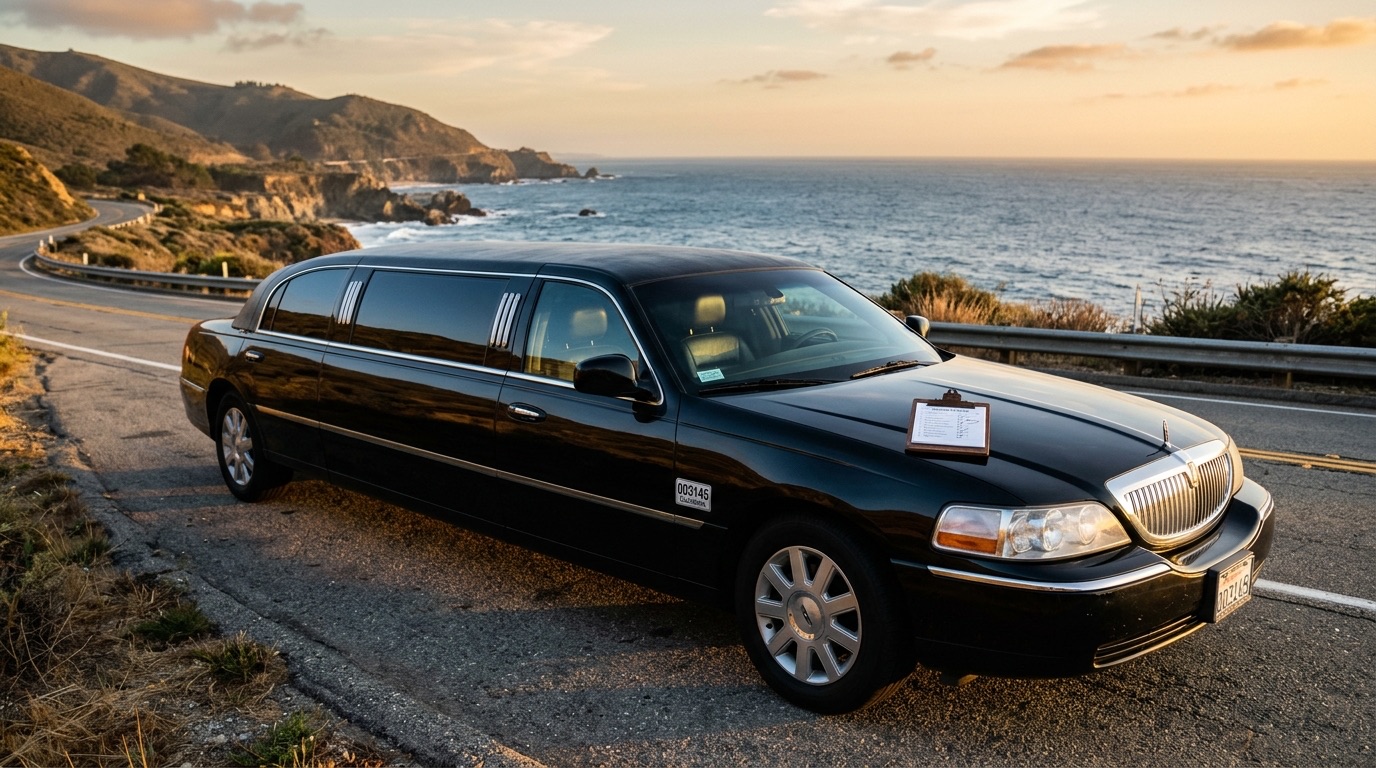
TCP stands for Transportation Charter Party. In California, for-hire passenger carriers such as limousine, black car, sedan, van and charter operators are regulated by the California Public Utilities Commission (CPUC), and the carrier holds a TCP permit. A TCP permit is also called a TCP licence or number.
To get one, the usual steps are to apply to the CPUC, show proof of the required insurance, register your vehicles, and meet driver and vehicle safety requirements. Fees, permit classes and enrolment programmes change, so treat the CPUC's published instructions as the source of truth and confirm each step before you apply.
Our California TCP records guide lists the trip, driver, vehicle and insurance records to keep once you hold a permit.
What does TCP mean on a car?
A TCP number shown on a vehicle tells the public and enforcement that the carrier is a CPUC-permitted charter-party carrier. Look for the carrier name and TCP number on the vehicle; the exact marking and placement rules are set by the CPUC, so confirm them for your vehicle class before you print decals.
How much does it cost to start a limo or car service business?
Costs break into five lines: the entity and operating authority, commercial insurance, the vehicle, brand and booking presence, and working capital for the months before revenue steadies. Insurance and the vehicle dominate, licensing varies by place, and software should be the smallest line.
A realistic plan builds the cost model for your own city first. Our startup-cost guide and start-a-car-service checklist cover each line, and the software line is small: Limozoft Starter is $399 one-time plus $10/month.
How much does a limo cost to buy?
Prices vary widely by type, age and condition, so treat the ranges as rough starting points and get dealer or broker quotes. A used executive sedan or SUV costs far less than a stretch limousine or party bus, and a new stretch conversion costs the most.
Whatever you buy, price it as a business asset: purchase or loan payment, insurance, maintenance, fuel, licensing and downtime. See our guide to limo profit per trip for how to turn those costs into a minimum fare.
What is the bottom line?
The short answer is worth testing against your own bookings before you decide. What this guide gives you: gives one honest answer per question, with the deeper guide linked for each topic. Limozoft costs $399 one-time plus $10 to $40 a month by fleet size, with no per-trip or per-driver fees, instant email support and a live demo on request.
Quick answers: Limozoft vs two common alternatives
| Limozoft | Limo Anywhere (Core) | Moovs | |
|---|---|---|---|
| Starting price | $399 one-time, then $10/mo (Starter) | $99/mo plus $299 license (per limoanywhere.com/pricing, October 2026) | Free tier; paid plans from about $99/mo (re-check on moovs.com) |
| Per-trip fees | None | Yes: about $0.25 per trip beyond the included trips | Payment processing carries a percentage |
| Driver app | Included | Included on Core; check current terms | Included; check tier |
| Branded passenger app | Included | Add-on: $199 setup + $99/mo (PWA) | Check tier |
| Farm-in / farm-out | LZNet, no per-trip network fee | LA Net, $0.75 per farmed trip | Check current features |
| Free trial | No; live demo on request | Check limoanywhere.com | Free tier |
| Contract | Month-to-month | Month-to-month, 30 days notice (their pricing FAQ) | Check current terms |
Pros and cons
Pros
- Gives one honest answer per question, with the deeper guide linked for each topic.
- Uses exact published prices with sources and dates, and says plainly when a fact is unverified.
- Covers the buying, operating, affiliate and licensing questions a new operator asks in sequence.
Cons
- Short answers cannot replace your local regulator, insurer or lawyer on permits and compliance.
- Competitor pricing changes, so re-check any number against the vendor's own site before you decide.
- A few searches in the list, such as asphalt dispatch and aviation flight-following, sit outside what limo software does.
Original data · Limozoft operator research 2026
$399 + $10–$40/mo
Limozoft's published price: a one-time setup, then a monthly fee by fleet size, with no per-trip or per-driver fees.
Keep exploring on limozoft.com
Request a Limozoft demo →
Live demo of the booking website and back office, using your own trips.
Limozoft pricing →
$399 one-time plus $10–$40/month by fleet size.
Limo software cost calculator →
Model your twelve-month cost against per-trip pricing.
Best limo dispatch software (2026) →
Neutral shortlist for 1–50 vehicle chauffeur fleets.
Limozoft vs MyLimoBiz →
Pricing, driver app, contract and migration compared.
Limo Anywhere alternatives →
Ranked replacements for small fleets.
Autocab alternatives →
Options for UK chauffeur and executive fleets.
LZNet affiliate network →
Farm trips in and out worldwide with no per-trip network fee.
Booking widget →
Embed instant-quote booking on your own site.
Corporate limo software (US) →
Client accounts, PO numbers and net-30 invoicing.
TfL private hire compliance software →
Licence expiry tracking and inspection exports for London.
Full FAQ →
Every answer operators ask before switching.
Frequently asked questions
How do I request a demo for dispatch software?+
How much does professional limo software typically cost?+
What is Limo Anywhere?+
Is MyLimoBiz legit?+
How does limo farm-out work?+
How do I find and vet limo affiliates?+
Which limo software reduces no-shows?+
Do taxi dispatch software companies offer free trials?+
What is the difference between cloud-based and on-premise dispatch?+
What does TCP mean on a car, and how do I get a TCP permit in California?+
How much does it cost to start a limo business?+
How much does a limo cost to buy?+
What are the alternatives to Autocab or vAutomove?+
Can I customise a white-label app with my own branding?+
Ready to see it live?
Book a 30-minute demo tailored to your fleet.
launch in 5 working days · month-to-month · everything included.
Related reading

Buying guide · 7 min
How Much Does Limo Dispatch Software Cost in 2026?

Operations · 7 min
Reduce No-Shows with Smart Dispatch Software

Operations · 10 min
Limo Cancellation and No-Show Policy Template: What to Charge and How to Enforce It

Operations · 12 min
Farm-In, Farm-Out: How Small Limo Operators Run Affiliate Work Without LA Net
Where to go next on Limozoft
- Limo Anywhere pricing, broken down line by line — what the bill really comes to once add-ons are stacked.
- Limozoft pricing — $399 one-time + $10–$40/mo with every feature included.
- Limozoft vs Limo Anywhere — the 2026 head-to-head on pricing, setup time, driver app and contract terms.
- Best dispatch software for small limo operators (1–15 vehicles).
See Limozoft on your own reservation data.
30-minute walkthrough. No slide deck. Launch in 5 working days.
Book a free demo →